Choosing NAS storage & drives usually means balancing expansion against simplicity: a rackmount server may ask you to supply drives and caddies, while a new unit may offer fewer bays and broad device access. The right home NAS depends on whether you are building around a multi-drive rack setup or choosing a sealed unit for phones and computers.
Quick verdict
The QNAP TS-809U is the fit for shoppers planning around an eight-bay, 2U rackmount NAS and accepting a used unit without HDDs or caddies. The Synology DS216play suits a different brief: a new, factory-sealed two-bay NAS with compatibility named for Android, iOS, iPhone, laptop, Mac, Memory Vault, and PC. The choice comes down to rack format and drive-bay count versus condition and device breadth.
Listed comparison
| NAS | Listed price | Condition |
|---|---|---|
| QNAP TS-809U | USD 270.75 | Used (Grade B) |
| Synology DS216play | USD 329.99 | New; factory sealed |
Where each NAS wins
QNAP TS-809U
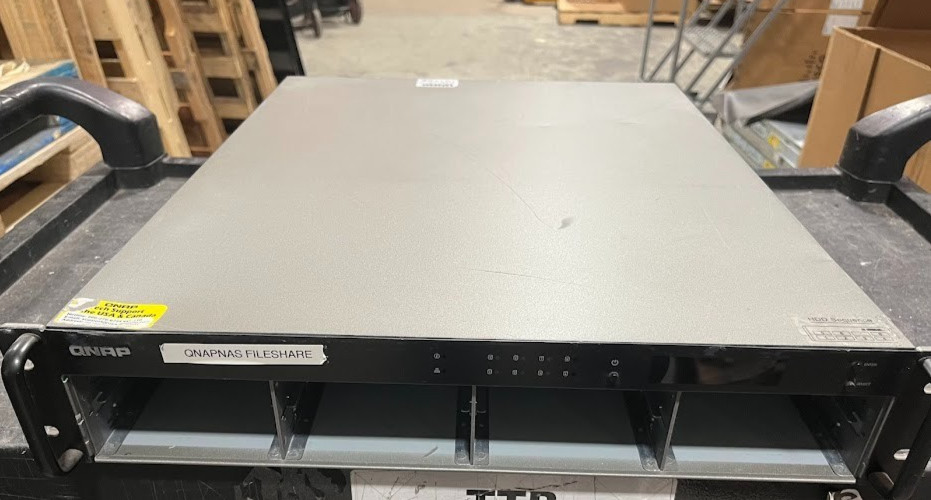
QNAP wins when a 2U rackmount chassis is the starting point. Its eight-bay layout supports a plan that calls for more drive positions than a two-bay unit; that is a comparison of bay count, not an assumption about storage performance. Remote Access is another concrete reason to favor it for a network-attached storage setup intended to be reachable beyond one local workstation.
Synology DS216play
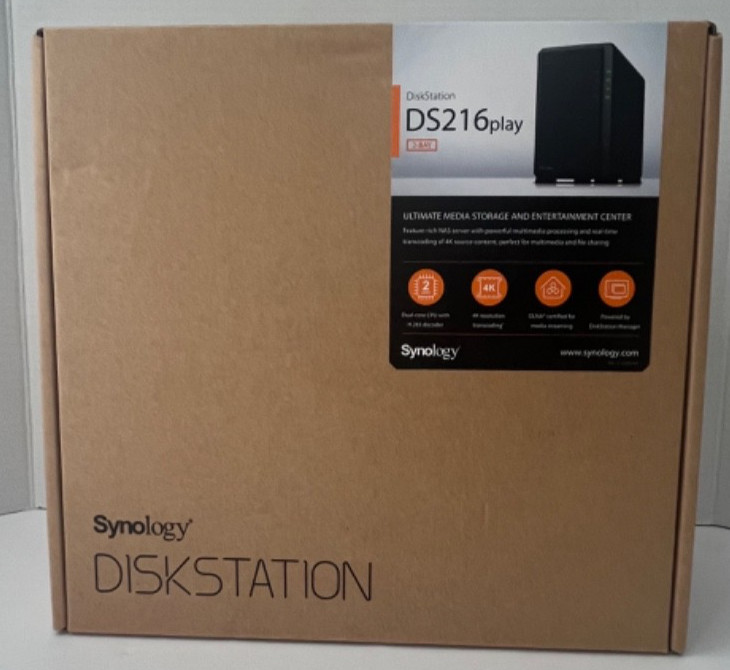
Synology wins when purchase condition and device mix lead the decision. New, factory-sealed condition gives it a clear fit for shoppers who do not want a used chassis. Its compatibility list names Android, iOS, iPhone, laptop, Mac, Memory Vault, and PC, while the description places it in personal or small-business storage. Those details make it the more natural match for a mixed-device home NAS plan.
Product notes
QNAP TS-809U
The QNAP TS-809U suits shoppers who specifically want an 8-Bay 2U Rackmount NAS and can organize the rest of the drive setup separately. That chassis wording is the clearest reason to choose it for a rack-oriented home NAS, while Remote Access adds a concrete network feature. The limitation is explicit in the title: No HDDs No Caddies. In other words, the purchase is the server rather than a drive-and-caddy bundle. Its Used (Grade B) condition is another practical qualifier. Choose QNAP when the rack format and Remote Access matter enough to accept that scope; the listed 1 GB cache should not be treated as proof of superior performance.
Synology DS216play
The Synology DS216play fits shoppers who want a new, factory-sealed NAS and a broad named device-compatibility list. Android, iOS, iPhone, laptop, Mac, Memory Vault, and PC make the cross-device angle concrete, especially for personal or small-business storage. Its limitation is the two-bay format: it is a less direct match for a plan built around a larger installed-drive count than the QNAP. The listed price is also USD 329.99, compared with USD 270.75 for QNAP, so the higher outlay is part of the trade-off. Choose Synology when condition and device mix lead; choose QNAP when the rackmount brief leads.
Final choice by use case
- Rackmount or multi-drive home NAS: Choose QNAP TS-809U. Its 8-Bay 2U Rackmount format and Remote Access align with that brief, provided the Used (Grade B) condition and no-HDD/no-caddies scope fit your build.
- New NAS for mixed devices: Choose Synology DS216play. Its factory-sealed condition and named Android, iOS, iPhone, laptop, Mac, Memory Vault, and PC compatibility suit that use case, while the two-bay format defines its scale.
- Price-led decision: QNAP is USD 59.24 lower than Synology. Choose it on price only when its used condition and drive-less scope still match the plan.