LinkStation 210 vs Synology DS423
When shopping for NAS storage & drives, the key decision is whether you want a defined-capacity network storage setup or an enclosure designed around multiple drive positions. The LinkStation 210 and Synology DS423 take those different approaches, so the right choice depends more on your storage plan than on the brand name.
Quick verdict
Choose the LinkStation 210 for a straightforward home NAS centered on shared files, backup, and Windows or macOS access. Choose the Synology DS423 if four drive bays, 2.5- and 3.5-inch drive form factors, and enclosure hardware are more important than having a stated capacity included in the product title.
At-a-glance comparison
The listed prices are USD 254.24 for the LinkStation 210 and USD 374.99 for the Synology DS423. Here is the practical distinction:
| Product | Listed price | Main listed storage detail |
|---|---|---|
| LinkStation 210 | USD 254.24 | 2TB network storage; 1-bay form factor |
| Synology DS423 | USD 374.99 | 4-bay, diskless enclosure |
Where each product wins
LinkStation 210 wins for cross-platform file sharing and backup. Its description names desktop and laptop use, Windows and macOS compatibility, centralized storage, and automated backup. That combination suits a household that wants a familiar network location for everyday files without planning a multi-drive enclosure first.
Synology DS423 wins for chassis-focused builds. The enclosure lists four bays, 2.5- and 3.5-inch form factors, two Gigabit Ethernet ports, and 2GB of DDR4 RAM. Those are useful deciding points for shoppers selecting a NAS enclosure around particular drive sizes and hardware connections, without treating any one specification as an automatic performance advantage.
Product notes
LinkStation 210
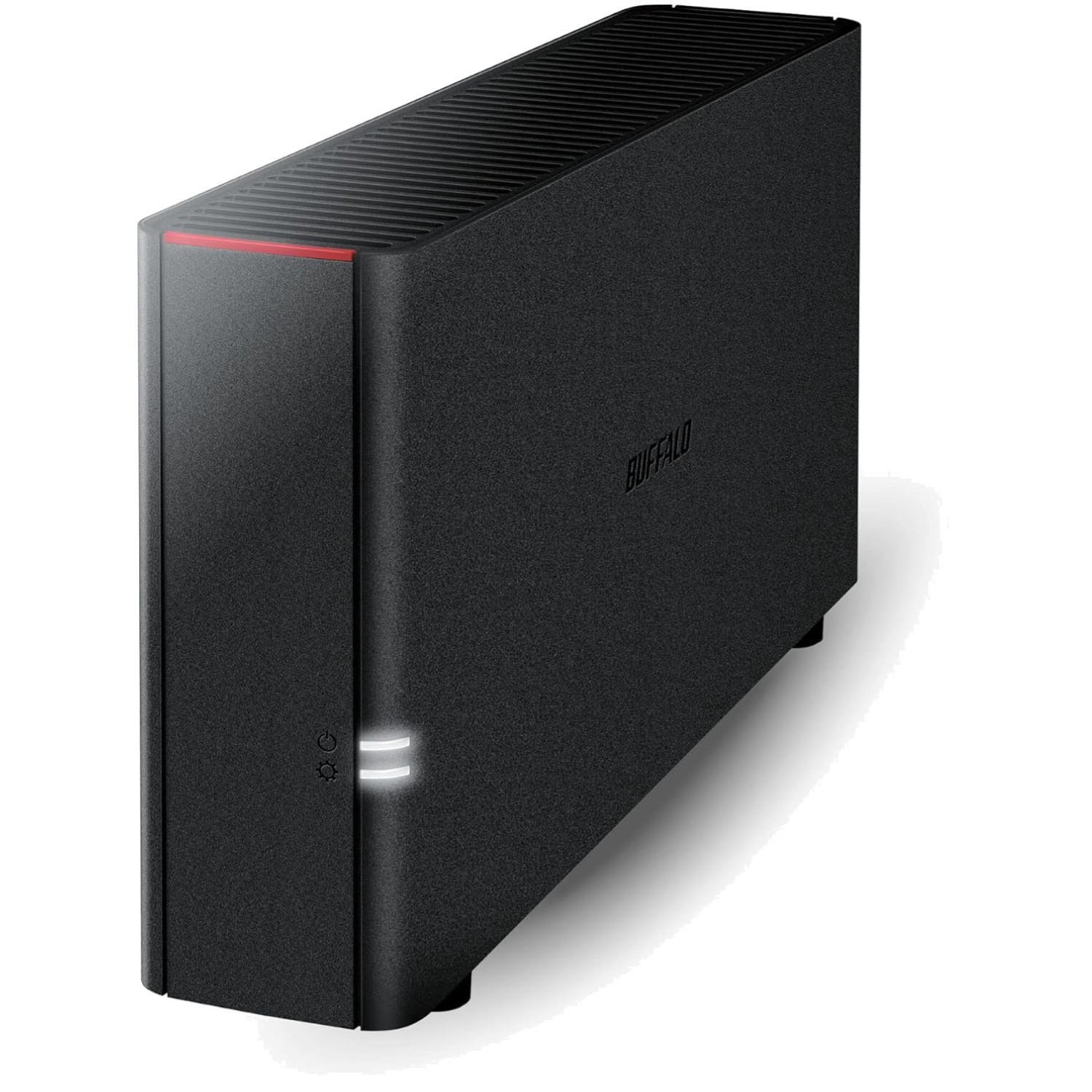
The LinkStation 210 suits a shopper who wants a single network location for everyday files and backup. Its description centers on centralized storage, file sharing, automated backup, cloud storage, data security, and encrypted transfer. That gives it a clear role in a home NAS setup where organizing files and backups is the priority. The compatible-device list names desktops and laptops, while software compatibility names Windows and macOS. The concrete constraint is the 1-bay form factor, so shoppers planning a multi-drive layout should instead consider the Synology DS423. The listed drive type is HDD, which further defines the storage setup around that format.
Synology DS423
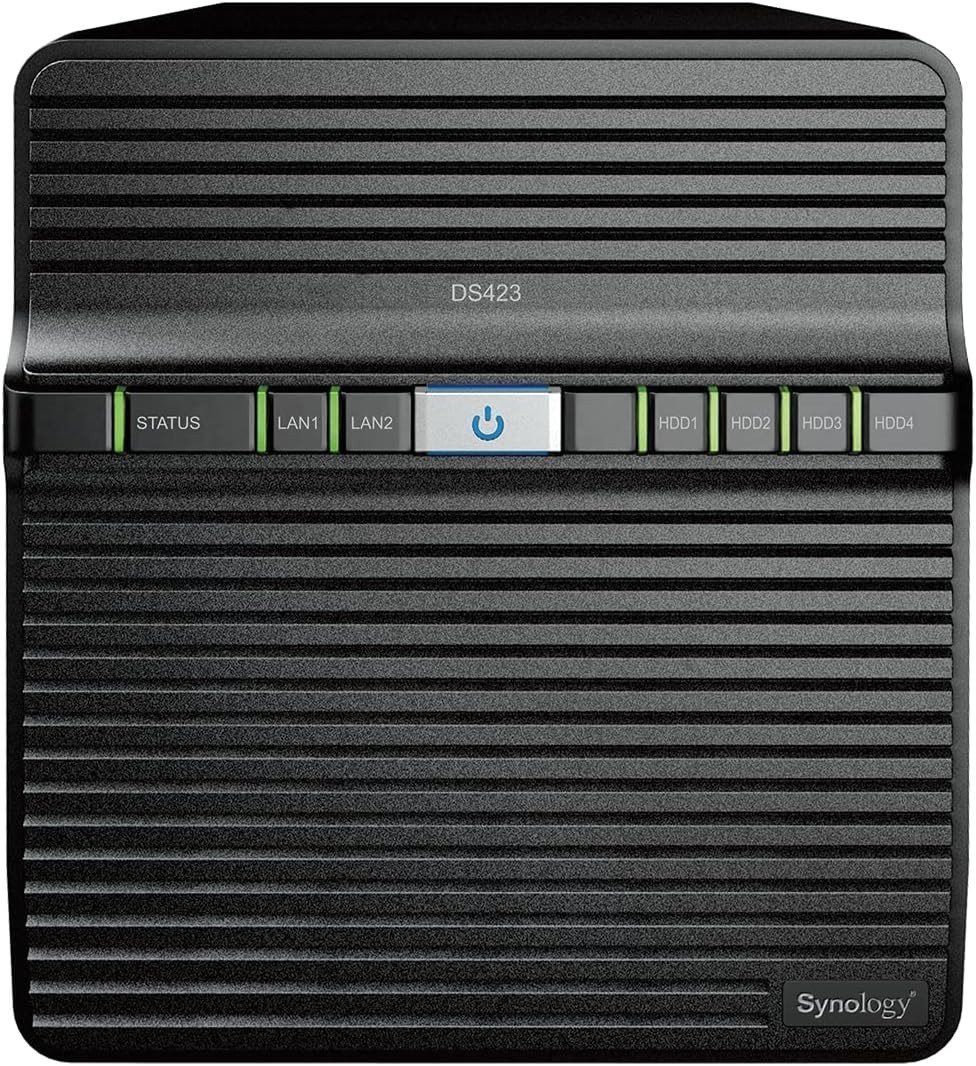
Synology DS423 makes sense for a shopper planning around enclosure hardware. Its listed form factor covers 2.5- and 3.5-inch drives, while the description names SATA drive bays, two Gigabit Ethernet ports, and 2GB of DDR4 RAM. Those details give shoppers concrete reasons to choose the enclosure when drive sizing and network connections matter to the build. The compatibility line names PC, whereas the LinkStation description specifically names Windows and macOS. The key limitation is that the DS423 is described as diskless, so the enclosure itself does not provide a stated storage drive. That makes its role different from a product centered on a defined 2TB capacity.
Final choice by use case
Choose LinkStation 210 when a stated 2TB setup, Windows or macOS access, and backup features match the plan. It also has the lower listed price, with the two prices separated by $120.75. Choose Synology DS423 when four drive bays are the deciding requirement and you want to organize the build around an enclosure. In short, LinkStation 210 is the clearer fit for a defined-capacity home NAS, while DS423 fits shoppers whose priority is a four-bay chassis.