Choosing NAS storage & drives often means balancing a low upfront price against a more explicitly configured enclosure. For a home NAS, the cheaper route can be appealing, but condition, power requirements, bay count, and device support can change which choice fits. The D-Link DNR-326 and Synology DiskStation DS216play take different approaches, so the right pick depends on whether you prioritize a lower-cost NAS role or a defined setup for your devices.
Quick verdict
With a wide gap between the listed prices, D-Link is the cost-first choice for a shopper who wants a plainly described NAS desktop role. Synology is the higher-priced choice for someone who wants a factory-sealed DiskStation with a more specifically defined setup. The difference is substantial enough that these are not interchangeable buying decisions: D-Link's appeal is simplicity of purpose and lower spend, while Synology's case rests on its named drive-bay configuration and device-compatibility list. If D-Link's condition fits your buying tolerance, it is the lower-spend direction; if condition and a defined multi-bay format matter more, Synology is the closer fit.
At-a-glance comparison
| Comparison point | D-Link DNR-326 | Synology DS216play |
|---|---|---|
| Listed price | USD 50.00 | USD 329.99 |
| Condition | Used | New |
| Interface | Ethernet | Ethernet |
Where each product wins
D-Link wins on entry cost
D-Link wins on its USD 50.00 listed price. That is the clearest fit for a shopper who wants to keep upfront spend low while still choosing a named network-attached storage desktop unit. The description also gives it a clear backup and file-storage purpose for a home or office network. The concrete trade-off is the required 12V adapter and the sold-as-is wording, both of which should be part of the buying decision. Its case is strongest when the goal is a straightforward NAS role rather than selecting around a more detailed bay configuration.
Synology wins on configuration detail
Synology wins when named device compatibility matters. Its USD 329.99 price is tied to a DiskStation whose compatibility list includes Android, iOS, iPhone, laptop, Mac, Memory Vault, and PC. The title and description also define a two-bay format, giving shoppers a concrete enclosure shape to match against their storage plan. The trade-off is the greater price distance from D-Link and the fact that a two-bay layout may not align with every desired arrangement. For shoppers planning around the listed devices and that specific format, Synology offers the more clearly framed path.
Product notes
D-Link DNR-326
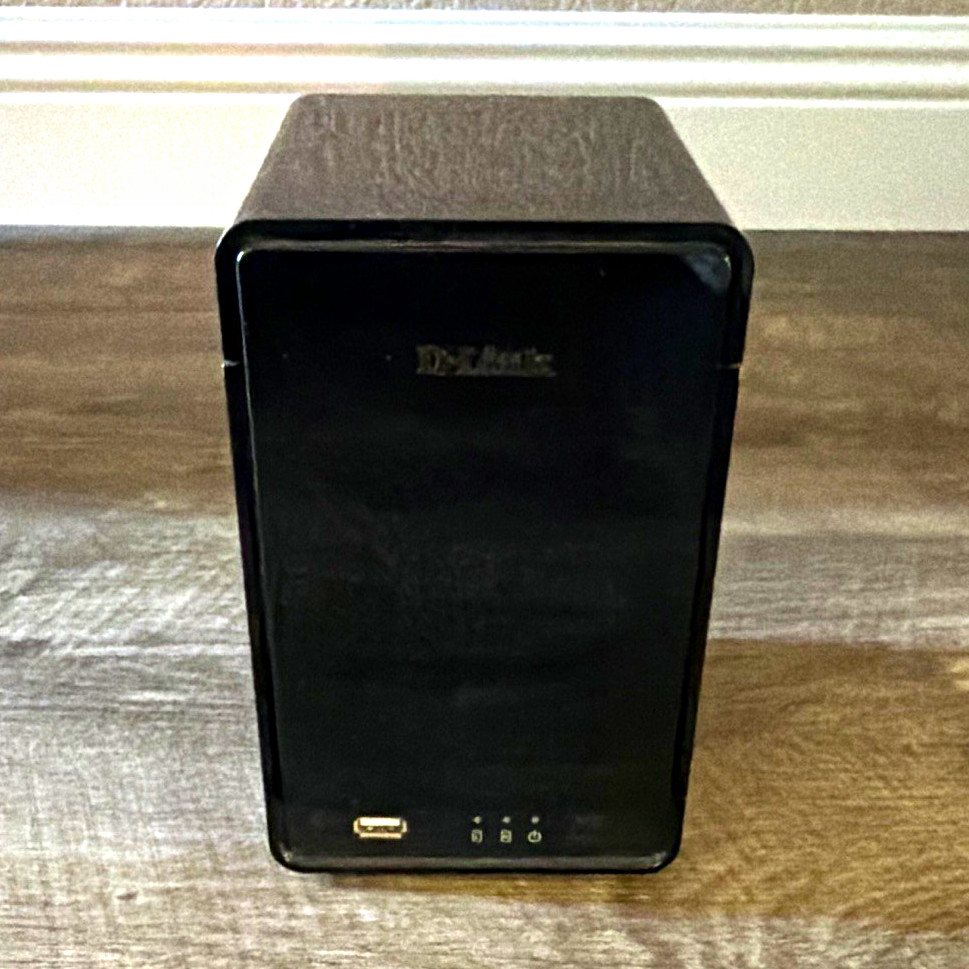
The D-Link DNR-326 has a clear use case: its description presents it as a NAS desktop unit for backing up and storing data across a network. That is the main reason to choose it if your home or office plan is centered on straightforward file storage rather than a specialized enclosure format. Its concrete limitation is the required 12V adapter, combined with the sold-as-is wording. Those terms are important parts of the decision, even though they do not change the unit's stated storage role. The black finish is shared with Synology, so it does not separate the two choices. For a shopper comfortable with those conditions, the D-Link's plainly defined backup purpose remains its strongest fit.
Synology DiskStation DS216play
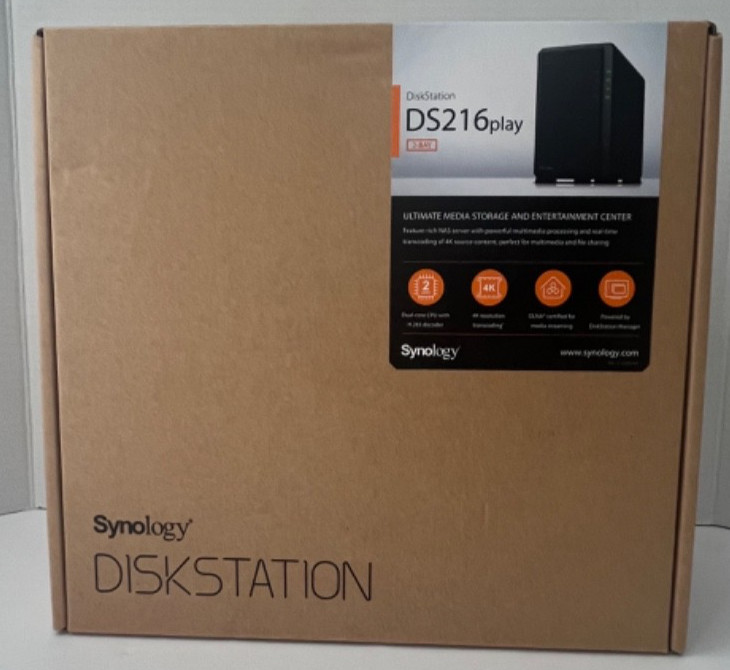
The Synology DiskStation DS216play gives shoppers a more defined enclosure concept through its two-bay designation. The factory-sealed wording is a concrete reason to choose it when a sealed condition is important to the purchase. Its limitation is equally specific: a two-bay layout may not align with a storage plan built around a different bay arrangement. The title also identifies it as a DiskStation NAS, making the intended category clear without needing to infer extra capabilities. That specificity is useful for a shopper whose storage plan matches the enclosure's stated shape and who wants the named device compatibility to align with the intended setup.
Final choice by use case
- Choose the D-Link DNR-326 when a lower listed price is the deciding factor and the purchase is centered on a straightforward NAS role.
- Choose the Synology DiskStation DS216play when a defined DiskStation format and named device compatibility matter more than the lowest spend.
- If both fit, use price versus configuration as the tie-breaker: D-Link is the price-led decision, while Synology is the more specifically framed setup.