Choosing developer server database software often starts with a practical licensing question: which named edition and package details fit the intended deployment? The two choices here differ in Standard versus Enterprise category, core and CAL wording, physical materials, and listed price. The key is to match those concrete details to the role the license needs to play, rather than treating the options as interchangeable.
Quick verdict
Microsoft SQL Server 2019 Standard fits when the Standard category, lower listed price, and stated one physical or VM server scope are central. SQL Server 2022 Enterprise fits when the Enterprise category and CoA package are the priorities. Both are listed as Brand New and support Linux and Windows, so operating-system coverage is shared. The listed-price spread is $161.49; use category and deployment terms first, then use price as the tie-breaker.
Comparison at a glance
| Product | Listed price | License category | Core/CAL wording | Operating systems |
|---|---|---|---|---|
| Microsoft SQL Server 2019 Standard | USD 123.50 | Standard | 24 Core; unlimited User CALs | Linux, Windows |
| SQL Server 2022 Enterprise | USD 284.99 | Enterprise | 96 Core; Unlimited CALs | Linux, Windows |
Where each product wins
Microsoft SQL Server 2019 Standard
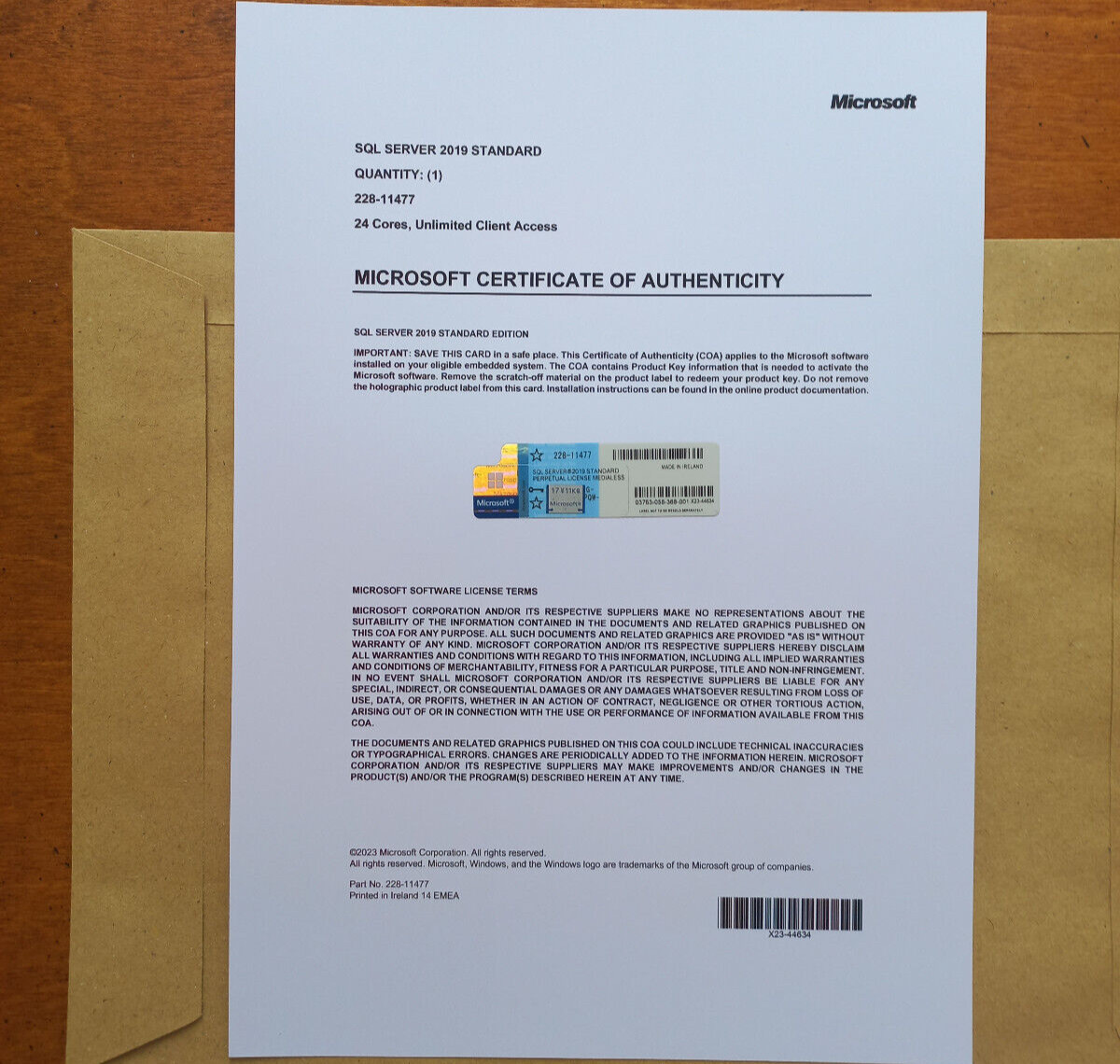
- Price and category: The lower listed price and Standard category make this the direct match when those requirements are fixed.
- Deployment terms: Production use, one physical or VM server, and the ability to move to a new installation later are all part of this license's terms.
SQL Server 2022 Enterprise
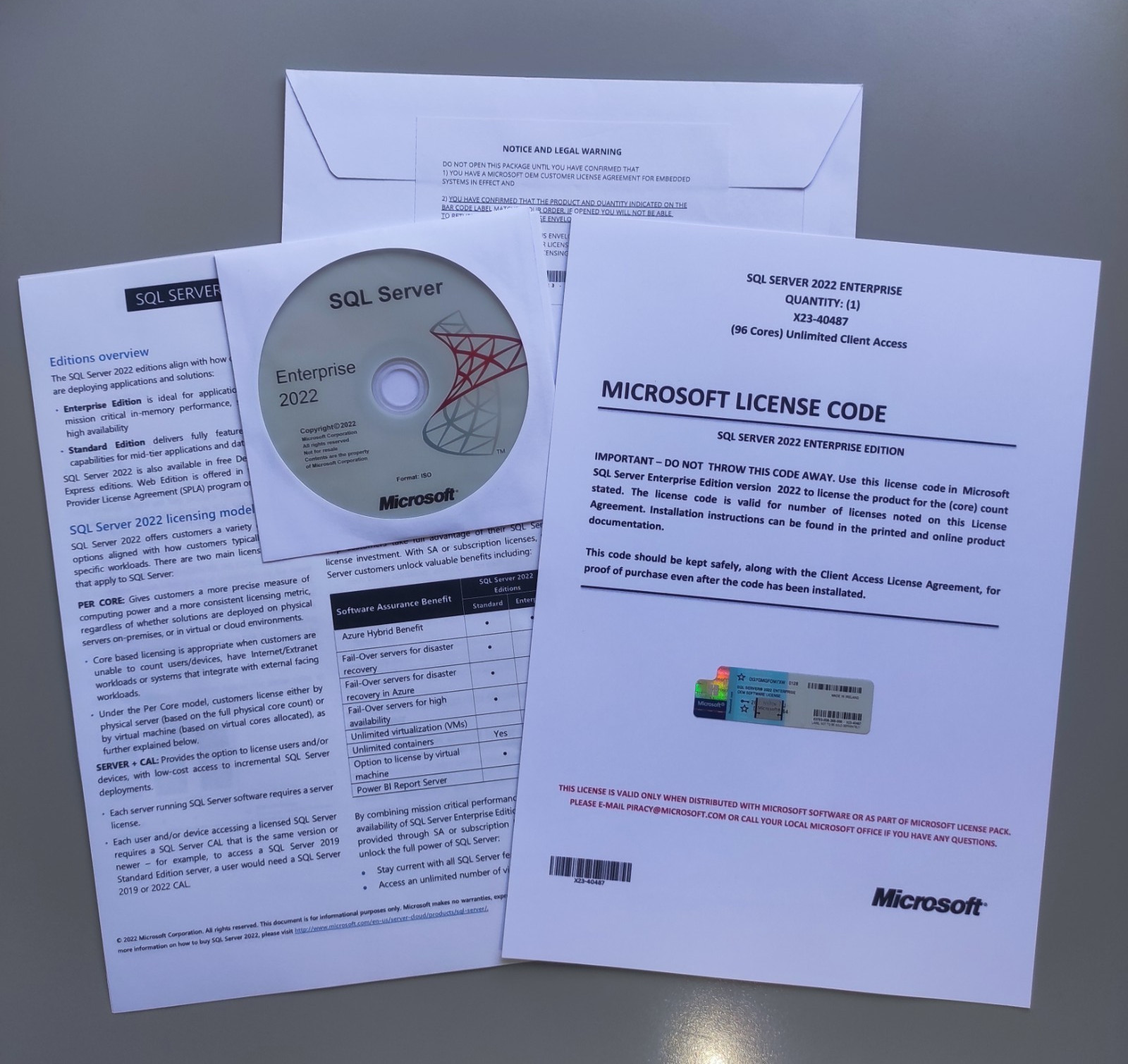
- Edition requirement: Enterprise is the defining reason to choose this option when that category is required.
- Package materials: A CoA, sealed envelope, license sheet, and documentation make the physical package part of the decision. The trade-off is the higher listed price.
Product notes
Microsoft SQL Server 2019 Standard
Microsoft SQL Server 2019 Standard brings together several concrete package details: it is unused, comes on a product label and CoA, and uses Product Key Card format. The license can be used in production environments, and it allows installation on one physical or VM server. It can also be moved to a new installation later if needed. That single physical-or-VM-server scope is the main limitation for a deployment needing a different arrangement. Choose it when Standard, the card format, production use, and the installation terms are the combination that fits. Its title also identifies unlimited User CALs, adding a clear licensing detail to the choice.
SQL Server 2022 Enterprise
SQL Server 2022 Enterprise centers on the Enterprise category. It is a 96 Core license with Unlimited CALs and CoA, while a sealed envelope contains a license sheet and documentation. Those details give it a concrete reason to choose when the Enterprise label and named physical materials are required. The limitation is edition fit: a project specifically requiring Standard would point away from Enterprise. This package is matched to a requirement that names Enterprise and its physical materials, rather than to a requirement centered on Standard.
Final choice by use case
- Standard-category use case: choose Microsoft SQL Server 2019 Standard when Standard is the required license category.
- Enterprise-category use case: choose SQL Server 2022 Enterprise when Enterprise is the required license category.
- When neither category is fixed: use the $161.49 spread as the price tie-breaker, then weigh each license's package and deployment terms.